
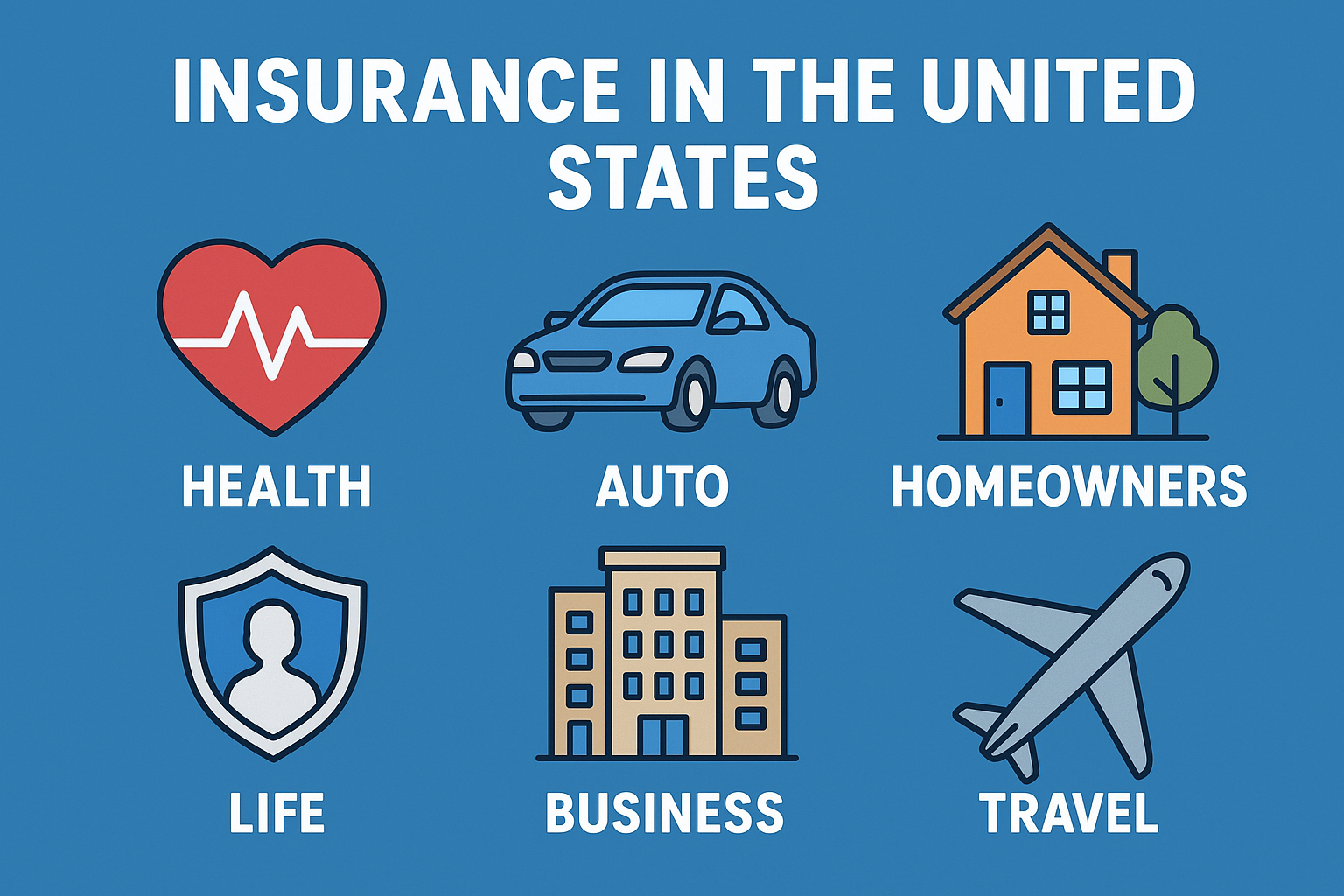
Insurance plays a vital role in the financial stability and economic security of millions of people in the United States. With a complex system made up of public programs, private companies, and state-level regulations, the U.S. insurance landscape can seem overwhelming—especially to newcomers. However, understanding how insurance works is essential for protecting yourself, your family, and your assets from unexpected financial burdens. This article provides a detailed, easy-to-understand overview of the major types of insurance in the United States, how they function, and why they are important.
Introduction: Why Insurance Matters in the USA
The United States is one of the most expensive countries in the world for healthcare, housing, automobiles, and legal services. A single emergency room visit can cost thousands of dollars, and car accidents often result in expensive medical bills and repair fees. Because of these high costs, insurance is not just a protective option—it is a financial necessity. Many forms of insurance, such as auto insurance, are legally required, while others like health and life insurance are strongly recommended for financial safety.
The U.S. insurance market is also one of the largest and most competitive industries globally. It offers a wide range of coverage options tailored to different needs. Whether it’s protecting a home from natural disasters or ensuring income for a family after the loss of a loved one, insurance provides peace of mind and financial security during uncertain times.
Major Types of Insurance in the United States
1. Health Insurance
Health insurance is one of the most essential forms of coverage in the U.S. because medical costs are extremely high. Without insurance, even basic medical care can be financially overwhelming.
How Health Insurance Works
Health insurance helps pay for doctor visits, hospital stays, medications, surgeries, and preventive services. Policies differ in terms of:
-
Premiums (monthly payments)
-
Deductibles (amount paid before insurance starts covering)
-
Copayments and coinsurance (shared costs)
-
In-network vs. out-of-network coverage
Types of Health Insurance in the U.S.
-
Employer-Sponsored Plans
Most Americans receive health insurance through their jobs. Employers usually pay part of the premium, making this option more affordable. -
Private Health Insurance
Individuals can buy insurance through the federal Marketplace (Healthcare.gov) or directly from private companies. -
Public Health Programs
-
Medicare: For seniors aged 65+ and some disabled individuals.
-
Medicaid: For low-income individuals and families.
-
CHIP: For children from families who earn too much for Medicaid but not enough for private insurance.
-
VA Health Care: For veterans.
-
Why Health Insurance is Important
Without insurance, treatments such as surgeries, emergency visits, and long-term care can bankrupt individuals. Health insurance ensures access to necessary care while protecting financial stability.
2. Auto Insurance
Auto insurance is mandatory in almost every U.S. state. Driving without insurance can result in fines, license suspension, or even jail time.
What Auto Insurance Covers
-
Liability Coverage: Covers injuries or damage you cause to others. Required by law.
-
Collision Coverage: Pays for your car repairs after an accident.
-
Comprehensive Coverage: Covers damage from theft, fire, storms, vandalism, and animals.
-
Uninsured/Underinsured Motorist: Protects you if the other driver has no insurance.
-
Medical Payments / Personal Injury Protection (PIP): Covers medical expenses for you and your passengers.
What Affects Auto Insurance Rates
-
Driving history
-
Age and gender
-
Location
-
Car type
-
Credit score
-
Miles driven annually
Why Auto Insurance Matters
In the U.S., car repairs and medical costs after accidents are extremely high. Auto insurance shields drivers from sudden financial responsibilities and keeps roads legally safer.
3. Homeowners and Renters Insurance
Whether someone owns or rents a home, property insurance provides essential protection.
Homeowners Insurance
Homeowners insurance covers:
-
Damage to the home
-
Personal belongings
-
Liability protection if someone is injured on the property
-
Temporary living expenses if the home becomes uninhabitable
Most mortgage lenders require homeowners insurance before approving a loan.
Renters Insurance
Renters insurance covers:
-
Personal belongings inside the rented apartment or house
-
Liability if someone gets hurt
-
Additional living expenses
It is inexpensive and widely recommended for renters.
Natural Disaster Coverage
Some states require additional policies for risks such as:
-
Earthquakes (California)
-
Hurricanes (Florida, Texas, coastal states)
-
Floods (National Flood Insurance Program)
4. Life Insurance
Life insurance provides financial support to family members after the policyholder’s death. It is especially important for people with dependents.
Types of Life Insurance
-
Term Life Insurance
-
Covers a specific period (10, 20, 30 years)
-
More affordable
-
No cash value
-
-
Whole Life Insurance
-
Lifetime coverage
-
Builds cash value
-
More expensive
-
-
Universal Life Insurance
-
Flexible premiums
-
Investment component
-
Why People Buy Life Insurance
-
To replace lost income
-
To pay for funeral expenses
-
To cover mortgage or debt
-
To secure children’s education
Life insurance provides peace of mind and protects families from unexpected financial hardship.
5. Business and Commercial Insurance
The U.S. is home to millions of small and large businesses, all of which require insurance to operate safely.
Common Types of Business Insurance
-
General Liability: Protects against lawsuits and accidents.
-
Commercial Property: Covers buildings, inventory, and equipment.
-
Workers’ Compensation: Covers employee injuries; required in most states.
-
Professional Liability (E&O): For professionals like doctors, lawyers, and consultants.
-
Cybersecurity Insurance: Protects against data breaches.
Importance for Businesses
Without insurance, a single lawsuit or accident could shut down a company. Insurance ensures long-term stability and legal compliance.
6. Travel Insurance
Travel insurance is common for international travelers. It covers:
-
Trip cancellations
-
Emergency medical care abroad
-
Lost luggage
-
Travel delays
In the U.S., many people buy travel insurance because domestic healthcare does not cover medical expenses in foreign countries.
How Insurance is Regulated in the United States
Unlike many countries where insurance is regulated nationally, the U.S. regulates insurance mainly at the state level. Each state has a Department of Insurance responsible for:
-
Approving rates
-
Licensing insurance companies
-
Protecting consumers
-
Investigating fraud
Some federal laws affect insurance (like the Affordable Care Act), but states hold most of the regulatory power.
The Role of Insurance Companies
The U.S. insurance market consists of:
-
Private insurance companies
-
Government programs
-
Mutual companies owned by policyholders
-
Nonprofit organizations
Major private companies include State Farm, Allstate, Geico, Progressive, UnitedHealthcare, and Aetna. These companies compete by offering different premiums, coverage levels, and discounts.
Challenges in the U.S. Insurance System
Though insurance provides essential protection, the American system has its challenges:
High Costs
Premiums, deductibles, and out-of-pocket expenses can be expensive, especially for health insurance.
Complex Policies
Coverage terms are often confusing, requiring careful reading of policy details.
Gaps in Coverage
Some individuals remain uninsured due to affordability issues or eligibility limitations.
Risk-Based Pricing
Insurance rates depend on personal risk factors like age, health, or driving record, which can raise costs for some groups.
The Future of Insurance in the U.S.
The industry is evolving with new technology and trends:
1. Digital Insurance Platforms
Online insurance marketplaces are simplifying comparison and purchases.
2. AI and Data Analytics
Insurance companies use AI to assess risk and detect fraud.
3. Usage-Based Insurance (UBI)
Auto insurers offer pay-per-mile or behavior-based pricing using telematics.
4. Rising Cyber Insurance Demand
Businesses are buying cyber insurance to protect against digital threats.
5. Health Insurance Reform
Debate continues over how to make healthcare more affordable.
Conclusion
Insurance in the United States is a critical part of financial planning and personal protection. From health and auto insurance to life and business policies, each type of coverage serves a unique purpose in protecting individuals, families, and businesses from financial loss. While the system can be complex and costly, it provides essential security in a world full of uncertainties. Understanding how insurance works empowers people to make better decisions, choose the right policies, and ensure financial stability for the future.